



 English
 中文简体
 русский
 Español
 Deutsch
Stainless Steel Valve Castings Y-Strainer Body is a precision-cast component designed to effectively...
READ MORESilica Sol Casting: A Practical Guide to Process, Materials, and Parts
Content
- 1 Silica Sol Casting in Practical Terms
- 2 How the Silica Sol Casting Process Works
- 3 Why Designers Consider Silica Sol Casting
- 4 Materials and Application Fit
- 5 Applications: Valves, Pumps, Automotive, and Industrial Parts
- 6 Design Details to Settle Before Quotation
- 7 A Practical Buyer's Checklist
- 8 Working With a Silica Sol Casting Supplier
Silica Sol Casting in Practical Terms
Silica sol casting is a form of investment casting that uses a silica sol binder to build a ceramic shell around a disposable pattern. In plain buyer language, it is one route for producing detailed metal parts with smooth surfaces and complex geometry, especially when the part must be made in stainless steel, alloy steel, carbon steel, or a high-temperature alloy.
At Xinghua Shuangjie Foundry, the silica sol casting range is organized around those four material families. Within each family, the catalog separates parts by application: valve castings, pipe fitting castings, pump parts, machinery parts, food machinery parts, chemical machinery parts, oil and gas castings, industrial hardware castings, marine castings, and automotive castings. That structure is useful because the same process question often leads to very different part requirements. A valve body, an exhaust flange, and a food machinery support block may all begin with a shell, but they do not place the same demands on alloy choice, inspection, or finishing.
If you are reviewing suppliers, it helps to understand both the process and the part family. You can read more about our foundry background and then compare the details below with your drawing, service conditions, and order volume.
How the Silica Sol Casting Process Works
In a typical silica sol investment casting route, a wax or plastic pattern is assembled onto a tree, dipped into a silica sol slurry, and coated with refractory stucco. The shell is built in repeated layers until it is strong enough to hold molten metal. The pattern is removed, usually by heat, and the hollow shell is fired. Metal is melted and poured into the preheated shell. After cooling, the shell is broken away, the parts are cut from the tree, and finishing follows.
The exact sequence can vary by foundry, alloy, and part size. For the buyer, the practical points are the shell, the pattern, and the alloy. The shell controls much of the surface condition and dimensional detail. The pattern determines the shape that can be reproduced. The alloy determines how the part behaves in service. When a drawing asks for thin sections, fine lettering, internal passages, or a smooth as-cast surface, shell building becomes especially important.
Silica sol is not the only binder used in investment casting. It is often selected when a foundry wants good shell strength and surface quality. The result can be a precise casting that needs less machining than a rougher process, although machining may still be required for critical mating faces, bores, threads, and tolerances.
Why Designers Consider Silica Sol Casting
Designers consider silica sol casting when the shape is too complex, too detailed, or too expensive to machine from solid stock. The process can consolidate several components into one casting, reduce weld seams, and create features that would be difficult to produce by fabrication. It can also suit parts that need smooth surfaces, fine detail, or controlled alloy chemistry.
The advantages are not automatic. A good casting starts with a design that respects pattern removal, shell support, metal flow, shrinkage, and finishing access. Very thick sections next to thin sections, tight internal corners, blind holes, and uncontrolled flatness can create problems in any investment casting process. The best time to discuss those features is before tooling is made. A small change to a radius, draft, or machining allowance can sometimes remove a large risk.
Cost also depends on more than casting weight. Pattern tooling, shell materials, alloy grade, yield, inspection, heat treatment, machining, and surface finish all affect the quotation. A part that looks simple on a drawing may carry more cost if it needs extensive inspection or tight machining on several faces.
Materials and Application Fit
The product structure separates silica sol castings by material first. This is a sensible way to start a conversation because the alloy family narrows the likely application and the questions that should be asked next.
| Material family | Typical selection logic | Common catalog applications |
|---|---|---|
| Stainless steel | Chosen when corrosion resistance, cleanability, or a balance of strength and surface quality is important. | Valve, pump, food machinery, chemical machinery, automotive, pipe fitting, industrial hardware, marine, and oil and gas castings. |
| Alloy steel | Chosen when mechanical properties need to be adjusted through alloying, with heat treatment and inspection agreed for the part. | Valve, pipe fitting, pump, machinery, automotive, industrial hardware, marine, and oil and gas castings. |
| Carbon steel | Chosen for mechanical and structural parts where cost control and suitable corrosion protection are part of the design. | Valve, pipe fitting, pump, machinery, automotive, industrial hardware, marine, and oil and gas castings. |
| High-temperature alloy | Chosen for service where heat resistance, oxidation resistance, or elevated-temperature strength is a design concern. | Valve, pump, chemical machinery, oil and gas, automotive, industrial hardware, marine, and pipe fitting castings. |
Stainless steel is often the first family buyers ask about because it covers a wide spread of parts, from a Y-strainer body in a fluid line to a food machinery valve housing or a precision intake pipe. The stainless steel group includes specific examples such as an exhaust flange, a flanged exhaust elbow, a flanged mounting connector, a centrifugal pump part, a multi-port fitting, a screw auger, a support block, a double-leaf butt hinge, a pneumatic wrench front housing, and a pump lantern bracket housing.
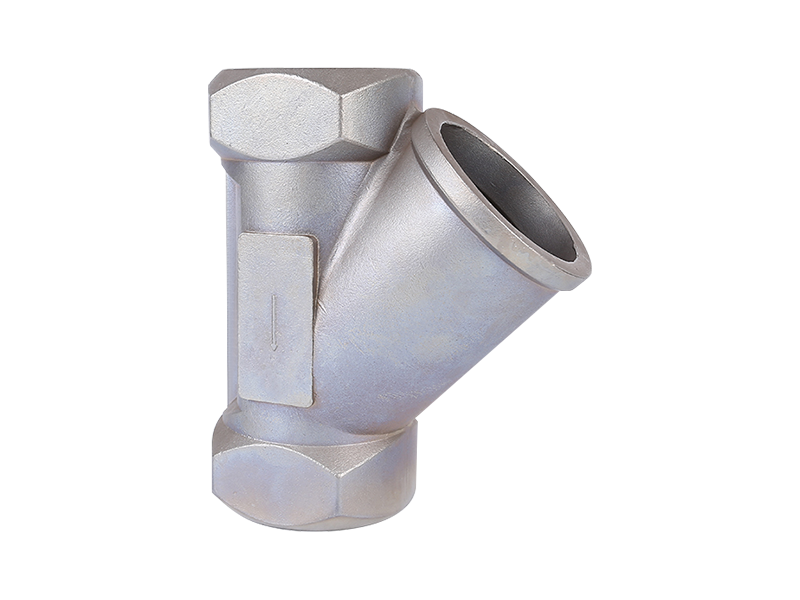 Stainless Steel Y-Strainer Valve Body CastingPrecision-cast stainless steel body for fluid filtration, offering corrosion resistance and durable performance for chemical, water, oil, gas, power, and food processing systems.View Product →
Those names show how the process meets real part geometry. A Y-strainer body needs a flow path and a housing form. A pump part needs mounting and fluid-handling features. A hinge component needs repeated shape consistency. None of those requirements can be judged from a material name alone, so the drawing and service conditions remain central.
Applications: Valves, Pumps, Automotive, and Industrial Parts
Valve and pipe fitting castings are a natural fit for investment casting because the part often combines a pressure boundary, a flow path, mounting features, and a surface that may need to seal or mate. The catalog lists valve castings and pipe fitting castings in all four material families. A stainless steel Y-strainer body is one example; a water system equal tee is another. Pressure rating, connection standard, wall thickness, and test method should be defined before quotation.
Pump castings sit in a similar position. They may be housings, brackets, impeller-related parts, or connection pieces. The stainless steel range includes a part described for centrifugal pump use and a pump lantern bracket housing in the industrial hardware group. These parts often need a balance between cast geometry and machined interfaces. A supplier should know which surfaces will be machined, which holes are cast, and how the part will be held during finishing.
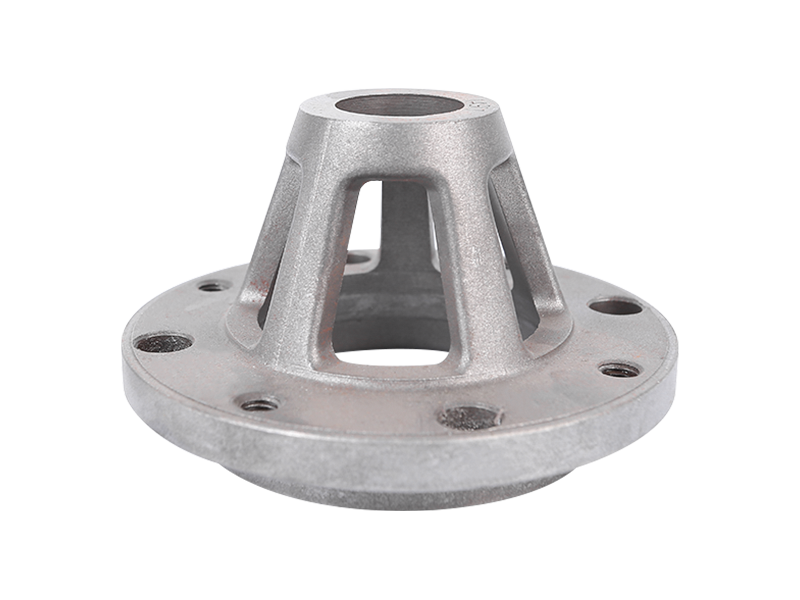 Stainless Steel Centrifugal Pump Casting PartsPrecision-engineered stainless steel castings for centrifugal pump impellers, casings, shafts, seals, housings, and flanges, with corrosion resistance, strength, and wear resistance for demanding fluid-handling applications.View Product →
Automotive castings in the catalog concentrate on engine, exhaust, intake, and mounting-related parts. Stainless steel examples include an engine component set, an exhaust flange, a flanged exhaust elbow, a flanged mounting connector, and a precision intake pipe. These parts show why alloy choice and dimensional control matter together. An exhaust part may face thermal cycling, while an intake part may need a smooth internal path and stable mounting faces.
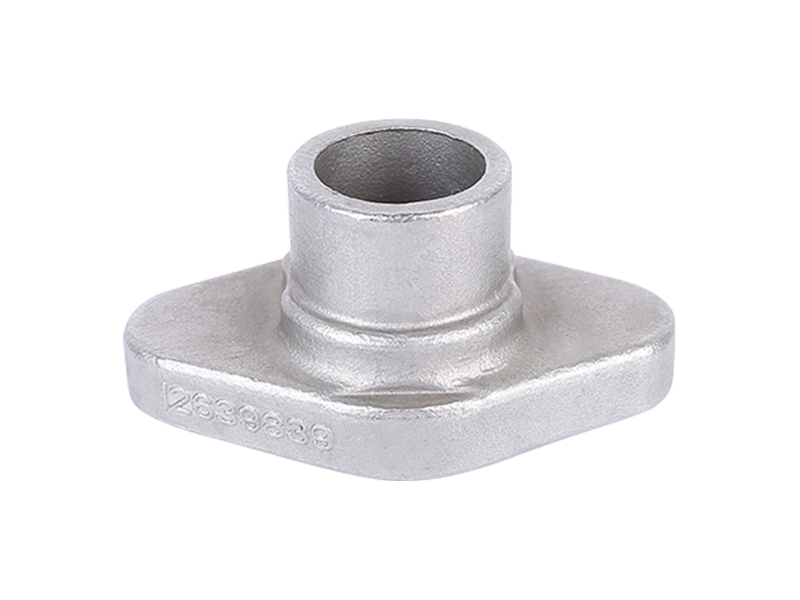 Stainless Steel Automotive Exhaust Flange CastingPrecision-cast stainless steel exhaust flange for automotive exhaust connections, offering corrosion resistance, high-temperature strength, oxidation resistance, and thermal fatigue resistance in manifold and turbocharger systems.View Product →
Industrial hardware, food machinery, chemical machinery, oil and gas, and marine castings fill out the rest of the range. Industrial hardware examples include hinges, mounting plates, tool housings, connector brackets, heavy-duty investment castings, and pump-related bracket housings. Food machinery examples include multi-port fittings, screw augers, support blocks, and valve housings. Chemical machinery includes a leveling plate casting. These parts are different, but the same rule applies: describe the service environment and the interfaces, not only the alloy.
Design Details to Settle Before Quotation
A useful inquiry gives a casting supplier enough information to quote the real part, not just the shape. The drawing should show critical dimensions, machining allowances, datums, and any features that must remain as-cast. A 3D model helps, but it does not replace a drawing with tolerances and notes.
Alloy grade should be stated, or the service conditions should be clear enough for a grade to be discussed. For stainless steel, the environment matters: fresh water, seawater, food contact, chemical exposure, and high temperature can lead to different choices. For carbon steel and alloy steel, heat treatment and surface protection should be agreed. For high-temperature alloys, operating temperature and atmosphere should be part of the conversation.
Inspection is another decision point. A buyer may need dimensional reports, material certificates, visual inspection, dye penetrant inspection, pressure testing, or radiographic examination. The right level depends on the part, not on a general preference for more testing. A focused inspection plan is usually better than adding every test to every part.
Finishing and delivery also need to be defined. Does the part leave the foundry as-cast, shot blasted, machined, polished, coated, or assembled? How will it be packed? What is the expected order pattern? These details are easier to solve at the start than after tooling is complete. If you have a drawing and want to discuss a custom casting inquiry, include the function, alloy, quantity, and any known inspection requirements.
A Practical Buyer's Checklist
Before sending a silica sol casting project out for quotation, check that the following points are clear:
- The part's function and the loads or media it will see in service.
- The preferred alloy family, or the conditions that will guide the choice.
- Critical dimensions, machining allowances, and surfaces that must not be cast.
- Expected lot size, repeat order pattern, and annual volume if known.
- Required inspection, material certification, and pressure or leak testing.
- Heat treatment, surface finish, coating, and marking requirements.
- Packing, delivery destination, and any documentation needed for quality records.
A short technical conversation can often remove uncertainty before a formal RFQ. If the drawing is still at concept stage, say so. It is better to discuss feasibility early than to discover a problem after the pattern has been cut.
Working With a Silica Sol Casting Supplier
The right supplier is not simply the one with the lowest price per kilogram. Look for a supplier who asks about the part's function, can explain how the casting will be inspected, and is willing to identify the assumptions behind a quotation. A clear quotation should separate tooling, castings, machining, testing, and packaging where those items apply.
At Xinghua Shuangjie Foundry, our product pages are arranged to help buyers move from material family to application and then to a specific part example. That path is not a substitute for engineering review, but it can make the first discussion more concrete. Whether the part is a valve housing, a pump bracket, an automotive flange, a food machinery fitting, or an industrial hardware component, the same principles apply: define the alloy, define the interfaces, define the inspection, and agree on the finish.
Silica sol casting can deliver detailed, repeatable metal parts when the design and the process are matched. The best results come from treating the casting as an engineered component, not as a commodity shape. With a clear drawing, an honest discussion of service conditions, and an inspection plan tied to function, the quotation and the production part are more likely to meet the same expectation.
Related Products
-
-
Stainless Steel Pipe Fitting Castings Equal Tee for Water Systems is a precision-cast fitting design...
READ MORE -
Stainless Steel Pump Parts Castings for Centrifugal Pump are precision-engineered components designe...
READ MORE -
Stainless Steel Food Machinery Parts Castings Valve Housing is cast from high-grade stainless steel ...
READ MORE -
Stainless Steel Food Machinery Parts Castings Multi Port Fitting demonstrates the superior advantage...
READ MORE -
Stainless Steel Food Machinery Parts Castings Screw Auger utilizes investment casting technology to ...
READ MORE -
Stainless Steel Food Machinery Parts Castings Support Block is a fundamental structural component en...
READ MORE -
Stainless Steel Chemical Machinery Leveling Plate Castings are precision-engineered components desig...
READ MORE
Related News
-
Stainless Steel Valve Castings sit at the intersection of two demanding disciplines — metallurgy an...
READ MORE -
Short Answer: Match the Grade and Casting Method to the Part's Duty Most stainless steel machinery ...
READ MORE -
Founded in 2007, Xinghua Shuangjie Foundry Co., Ltd. is a modern manufacturer specializing in the R...
READ MORE -
Specializing in precision casting based on silica sol medium-temperature wax technology, Xinghua Sh...
READ MORE
Customized service
Customized service
Customized service
Customized service
Telephone consultation
The consultation form is here.
+86-18552688245Working hours 8:00~17:00
-
Address
Zhangguo Town Industrial Concentration Zone, Xinghua City
-
E-mail
tech-support@sjcastings.com
accounting@sjcastings.com
sales.manager@sjcastings.com
-
Friendship Link
sjcastings.com
-
Social Media Account
Copyright Xinghua Shuangjie Casting Co., Ltd. All Rights Reserved
